
Cannabis & Smoking Alternatives
What Is Vaping?
Jan
What Is Vaping?
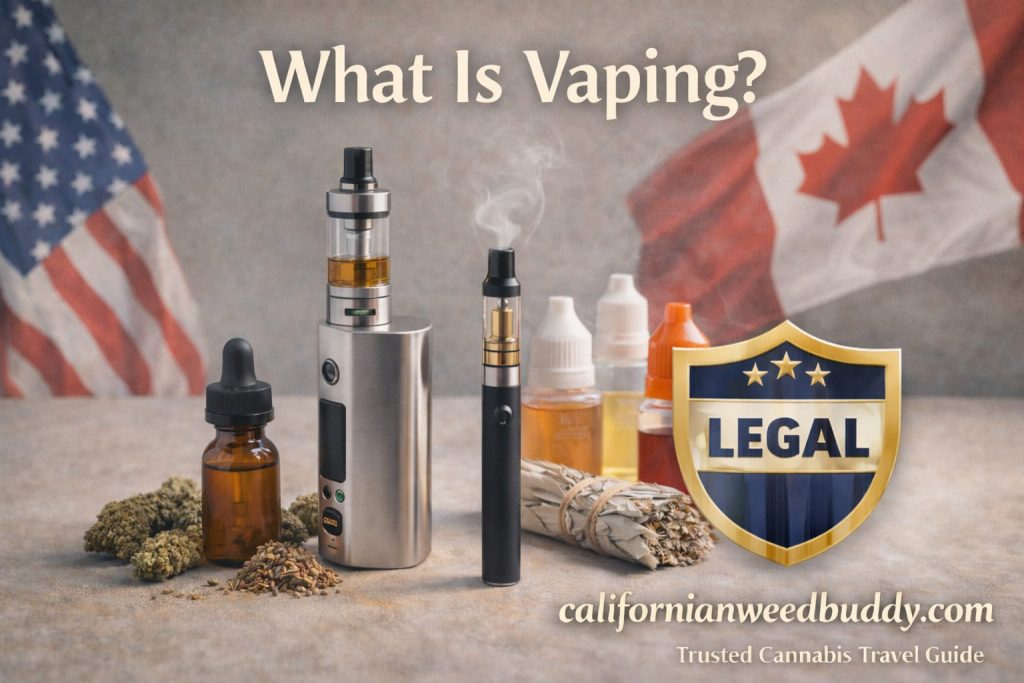
Vaping refers to the process of inhaling vapor produced by an electronic device rather than smoke created by combustion. These devices heat a liquid or oil commonly called e-liquid or vape juice into an aerosol that users inhale. Over the past decade, vaping has become widely discussed across wellness, smoking alternatives, and cannabis-related conversations.
As a trusted educational platform, californianweedbuddy.com provides clear, research-based insights to help readers understand what vaping is, how it works, and how it is commonly used in the United States and beyond.
How Vaping Works
Vaping devices function by using a battery-powered heating element to warm a liquid or oil until it turns into vapor. Unlike traditional smoking, vaping does not involve burning plant material or tobacco, which significantly reduces smoke-related byproducts. This difference is one of the main reasons vaping is often discussed as an alternative delivery method. Understanding how vaping works helps consumers make informed decisions about device types, product quality, and responsible usage.
Key Components of a Vape Device
Most vape devices include a battery, a heating coil, and a cartridge or tank that holds the liquid or oil. When activated, the battery powers the coil, which heats the substance to a temperature that produces vapor. Some devices allow users to control temperature and airflow, while others are designed for simplicity and convenience. Knowing these components helps users choose devices that align with their experience level and intended use.
What Substances Are Commonly Vaped?
Vaping is not limited to one type of product. Many people vape nicotine-based e-liquids, while others use cannabis-derived oils or herbal blends where legally permitted. Each substance has different effects, regulations, and safety considerations. Reliable information sources like californianweedbuddy.com emphasize the importance of knowing what is in a product before use, including ingredient transparency and lab testing.
Vaping Nicotine vs Cannabis Products
Nicotine vaping products are often associated with smoking alternatives, while cannabis vaping is typically used for controlled dosing and discretion. Cannabis vape products may contain THC, CBD, or other cannabinoids depending on local laws. Regardless of the substance, quality, legality, and moderation remain critical factors for safe use.
Vaping Compared to Smoking
One of the most common questions is how vaping differs from smoking. Smoking relies on combustion, which produces smoke, ash, and tar. Vaping, by contrast, produces vapor without burning material. This distinction affects odor, user experience, and exposure to combustion byproducts. While vaping is not risk-free, many users choose it for perceived control, reduced odor, and convenience.
Why Some Users Prefer Vaping
Users often cite discretion, flavor variety, and controlled dosing as reasons for choosing vaping. Vapor tends to dissipate faster than smoke and produces less lingering odor, which can be appealing in certain settings. However, responsible use and awareness of regulations are essential.
Legal and Safety Considerations
Vaping laws vary by region and depend on the substance being used. Age restrictions, product labeling requirements, and usage locations are regulated at both state and federal levels. Consumers should always follow local laws and avoid unverified products. Educational platforms such as californianweedbuddy.com help users stay informed about evolving regulations and best practices.
Final Thoughts on What Vaping Is
Understanding what vaping is allows consumers to approach it with clarity and responsibility. Whether used for nicotine alternatives, cannabis products, or herbal blends, vaping requires informed choices, quality products, and moderation. Relying on trusted resources ensures users stay educated, compliant, and confident in their decisions.
FAQs:
- What does vaping mean?
Vaping is the act of inhaling vapor produced by a heated liquid or oil using an electronic device. - Is vaping the same as smoking?
No. Vaping produces vapor without combustion, while smoking involves burning material and inhaling smoke. - What can be vaped?
Common products include nicotine e-liquids, cannabis oils, and legally approved herbal blends. - Is vaping legal?
Legality depends on age, location, and the substance being vaped. Always check local regulations. - Is vaping safe?
Vaping is not risk-free, but understanding products, sourcing quality items, and using them responsibly reduces potential risks.
